No setup is changed by reading this guide. Come back from any dashboard or the classroom navigation.
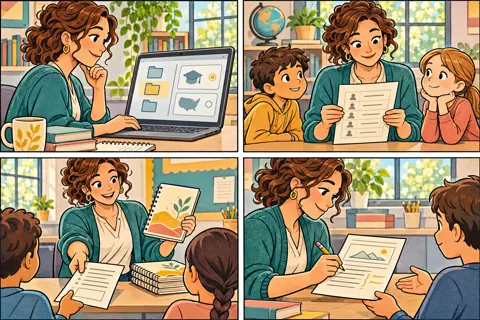
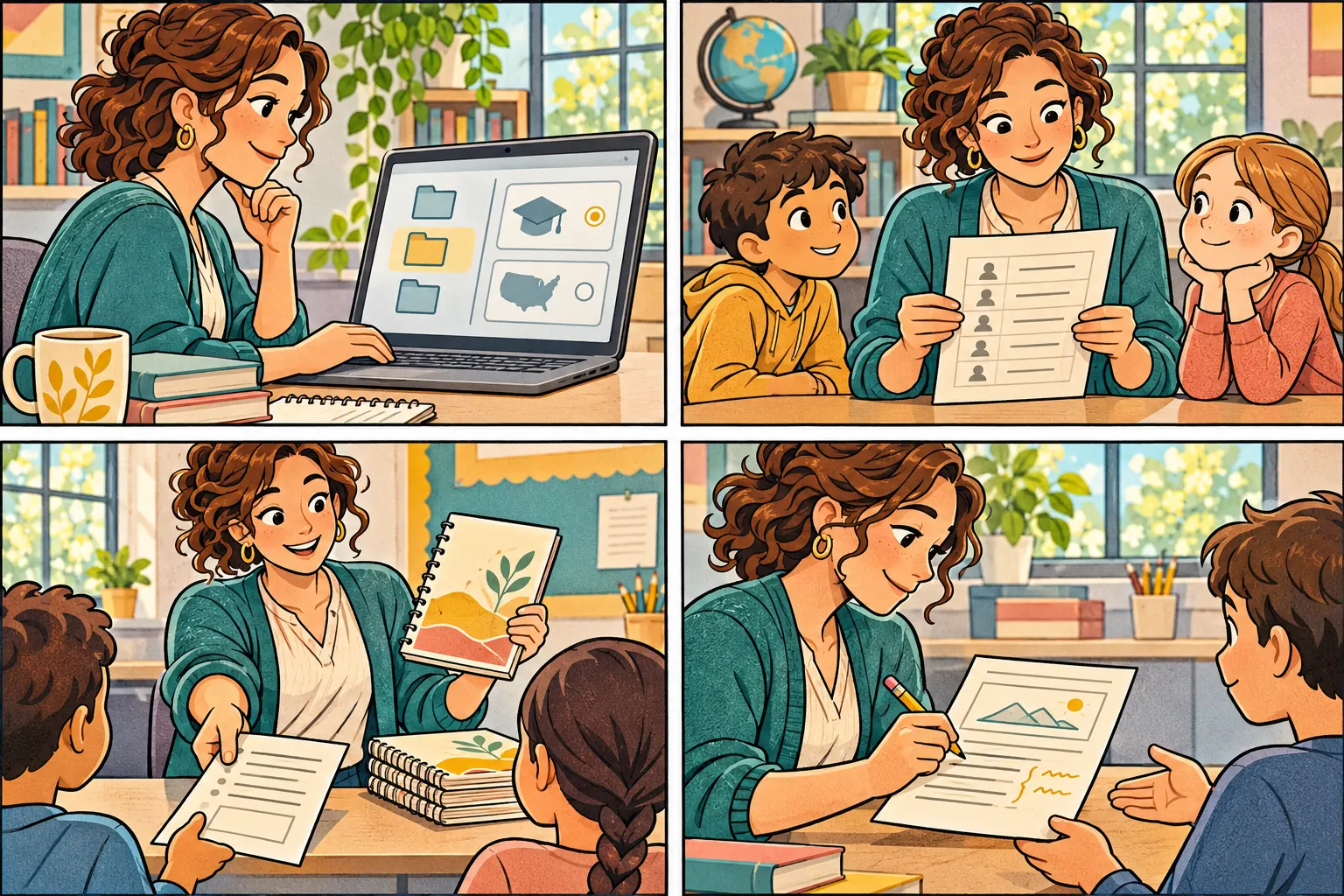
A class, a task, a feedback loop. Original illustrated example, not a screenshot; follow the written steps below.See the practice and feedback cycle
Teacher assignsA resource and instructions for the class, a group, or selected students.
Student respondsSave a draft, then submit the response.
Teacher returnsFeedback stays private until the teacher returns the work.
One connected loop. Opening a resource alone does not complete the assignment.
Teacher walkthrough
Follow the steps in order, or jump to what you need.
Create a class
Choose the class name, grade, state, and assessment.
Use the teacher dashboard to create the class. Keep student names minimal: a first name and last initial are enough. A parent profile is not automatically a classroom enrollment.
Add one student at a time or preview a roster CSV before confirming it.
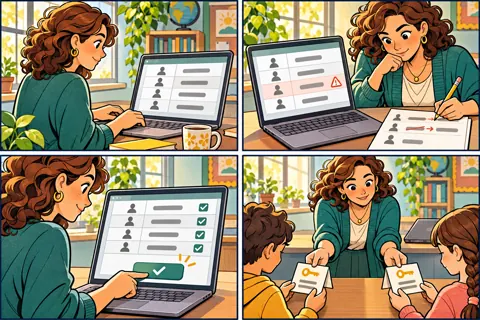
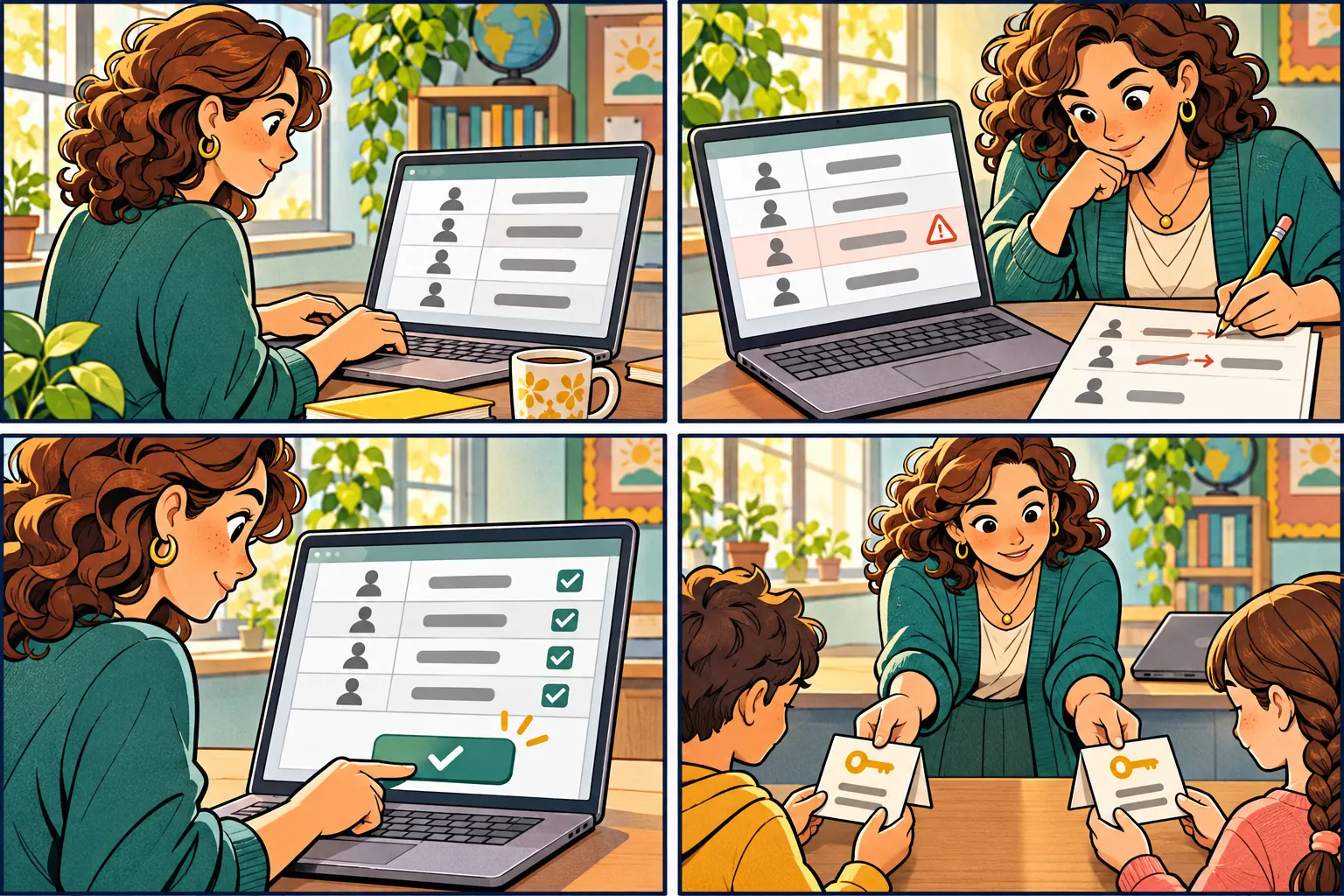
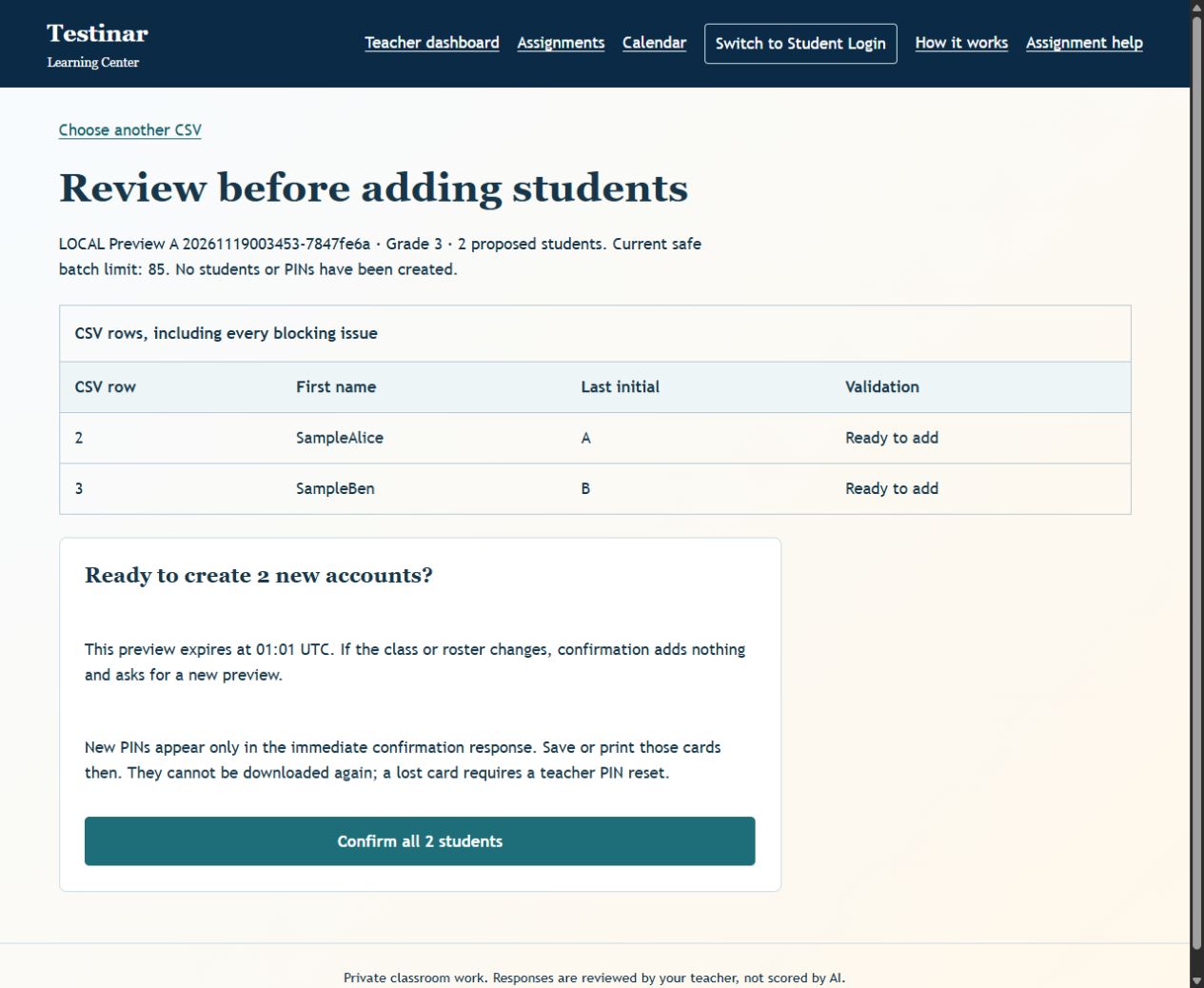
From your class, choose Roster CSV import. Use the template, inspect every row, and confirm only when it is correct. New login cards appear once after import. Print them privately; lost PINs need a teacher reset. Do not upload email addresses, dates of birth, or other sensitive details.
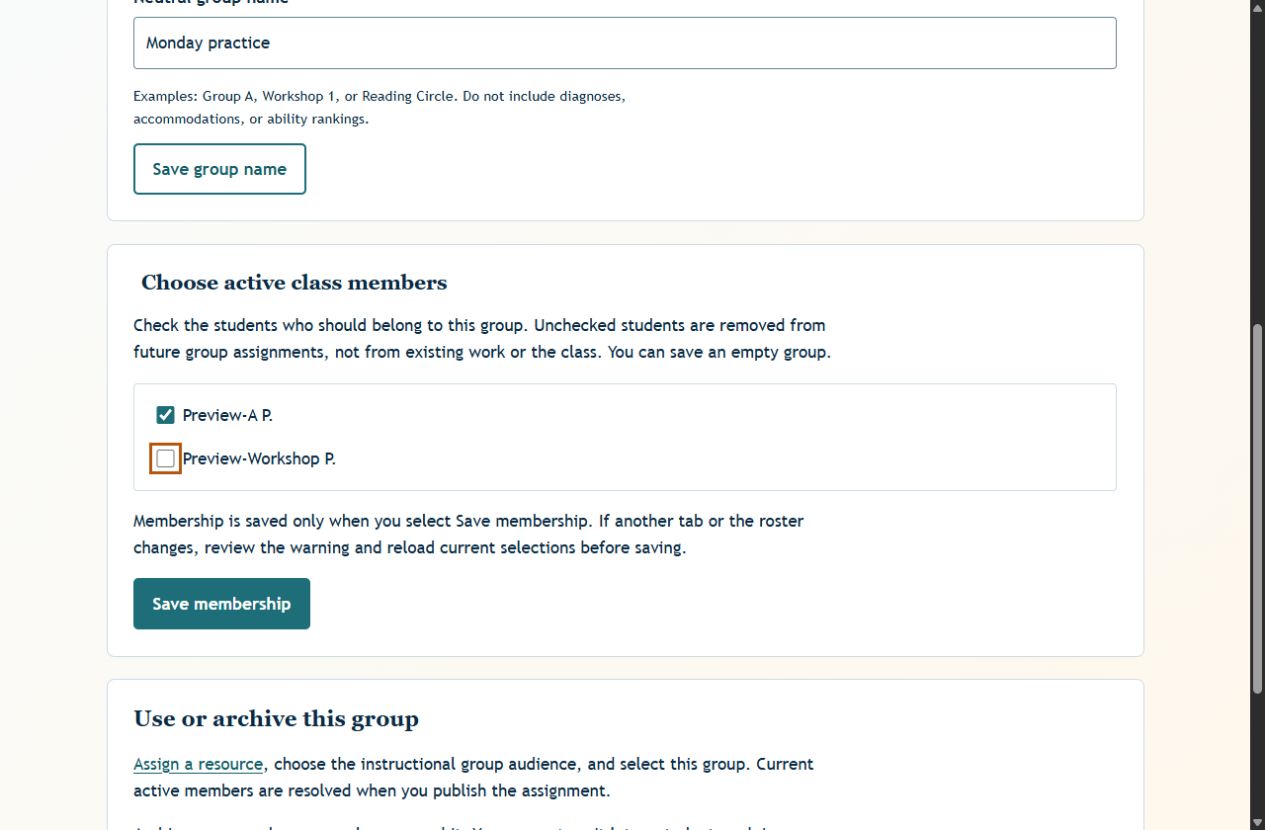
Use neutral names such as Blue group or Monday practice.
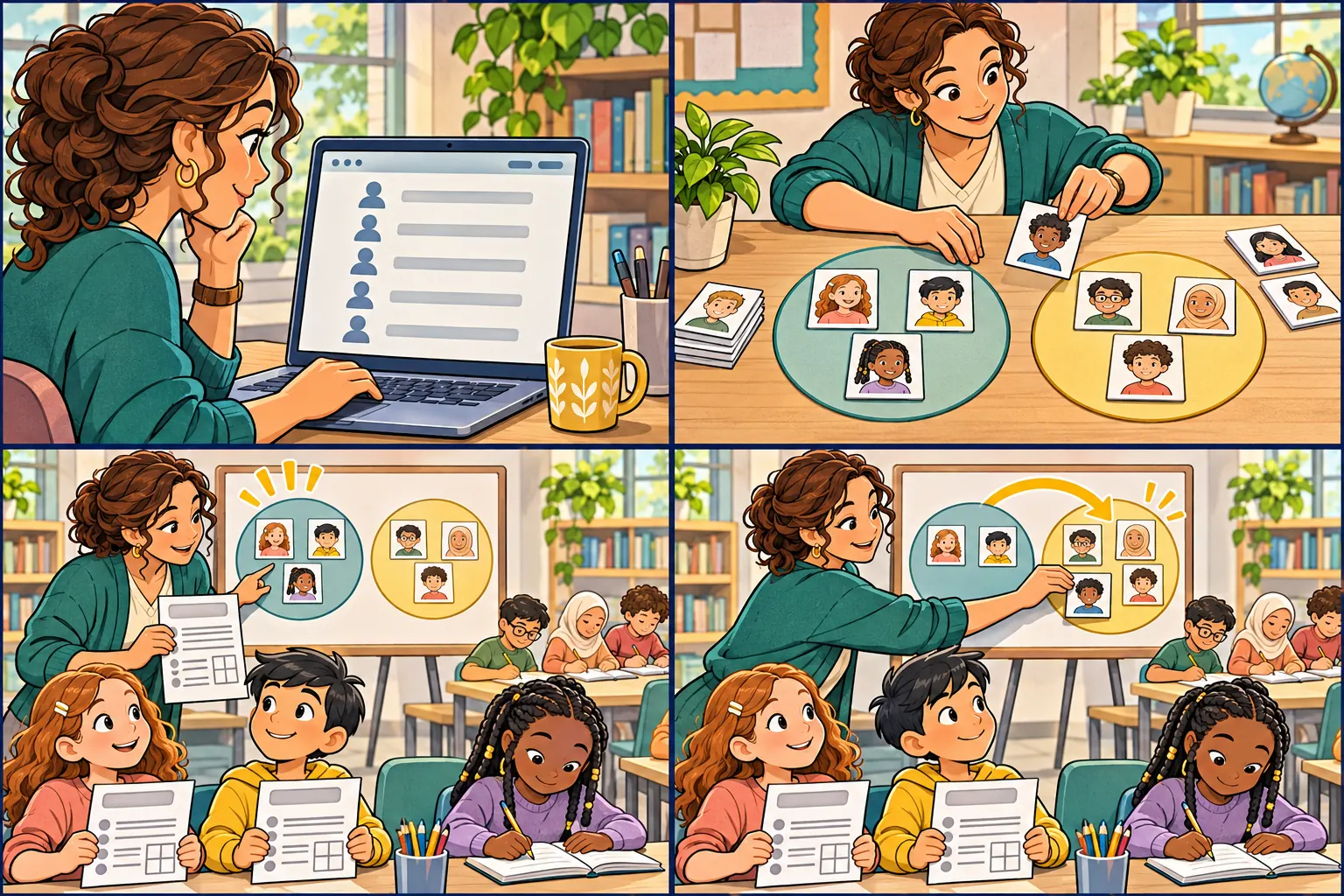
Open Student groups in the class and select active students. A student may be in more than one group. Group names are teacher-only, not labels shown to students. Group changes affect future assignments, not existing recipients.
Choose an approved lesson or worksheet, add instructions, and choose the recipients.
Assign to the whole class, selected students, or a group. Add an optional due date and a rubric that says what a good response includes. The recipient list is fixed when you assign. Opening a practice resource does not record a grade or complete the assignment.
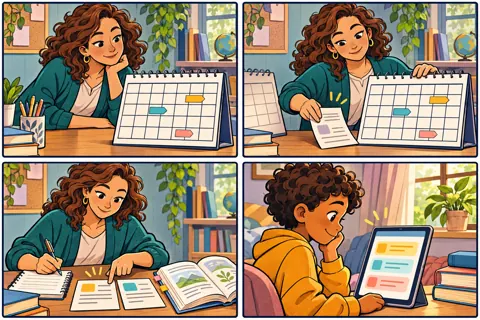
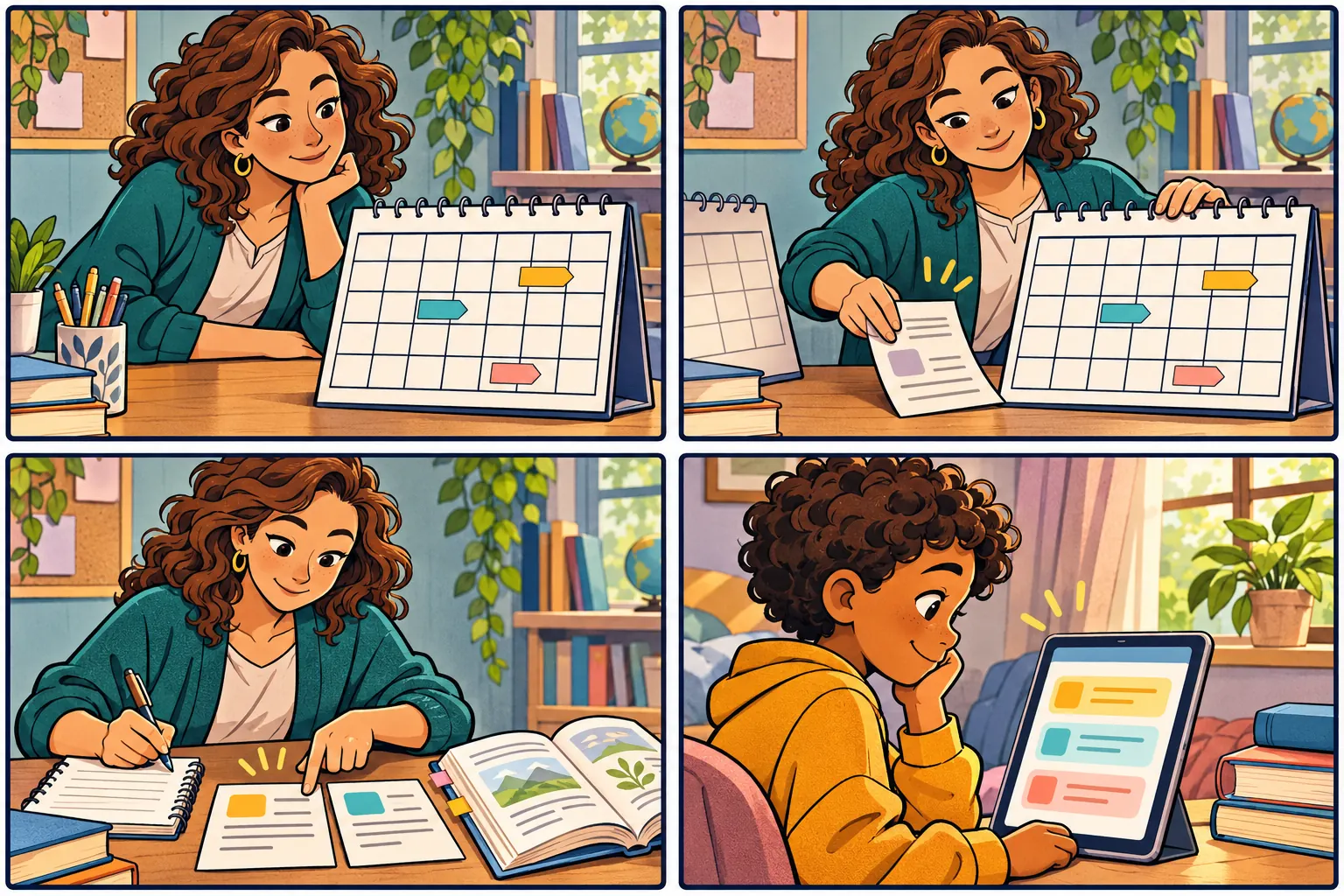
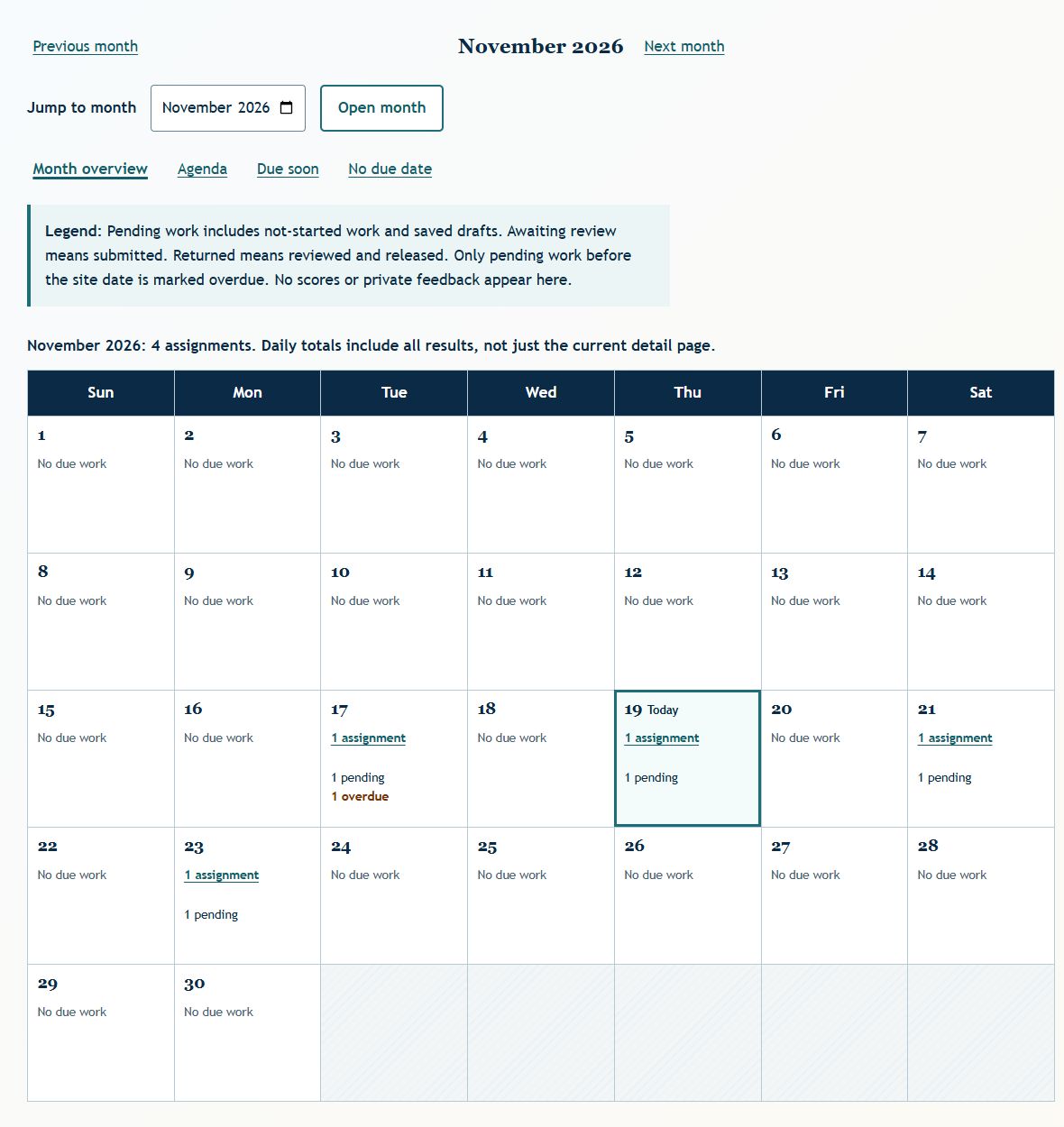
See due dates across your classes or focus on one class.
Use month view for planning and the agenda for a readable list. Work without a due date appears separately. Due dates are date-only planning dates, not timers or automatic grade penalties. The calendar explains its reference date.
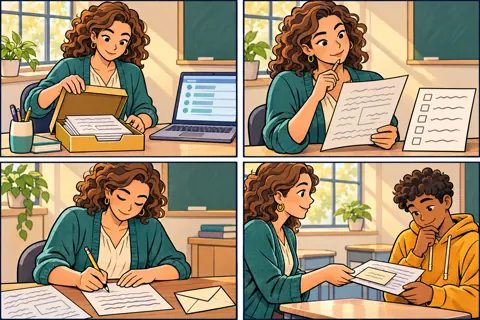
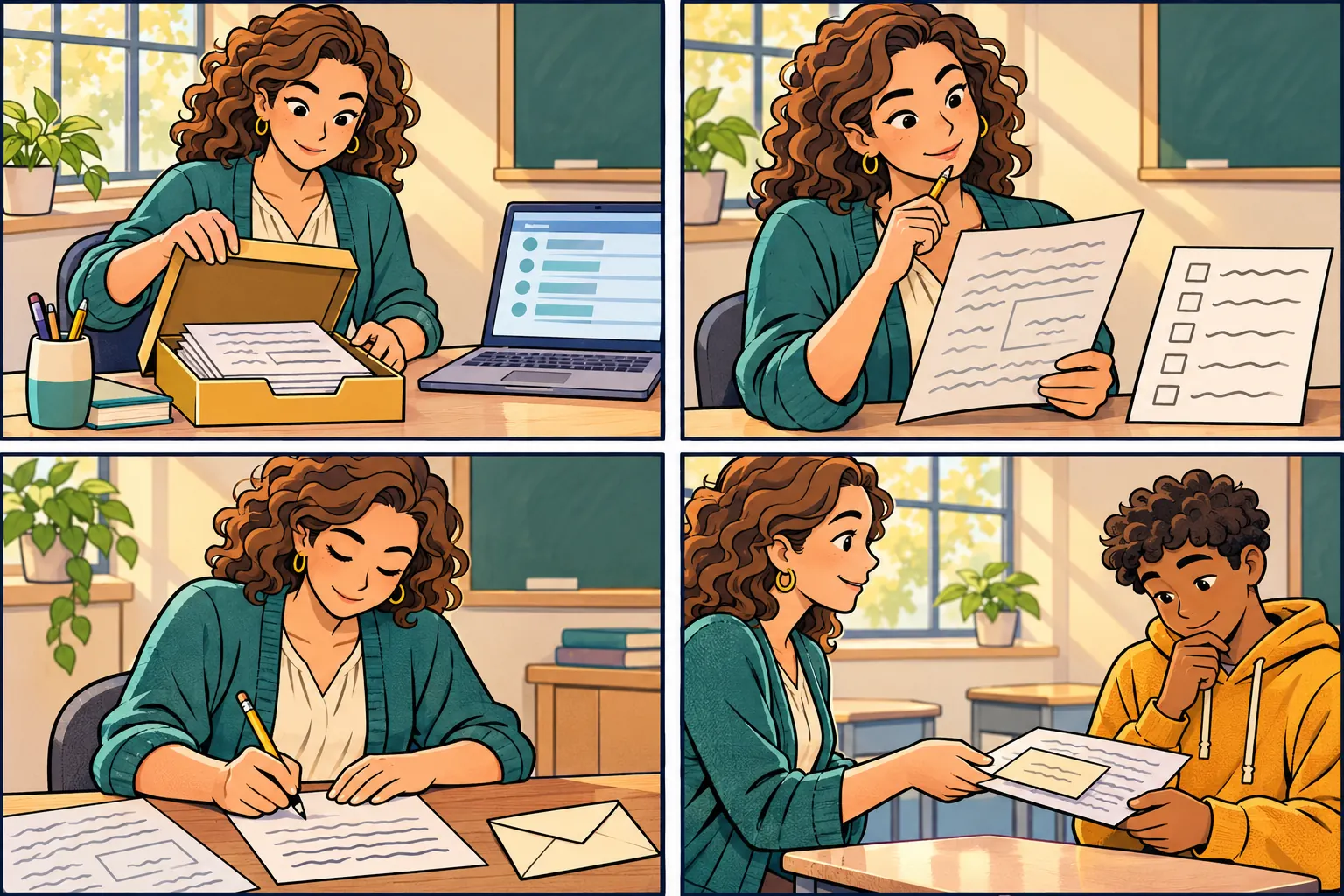
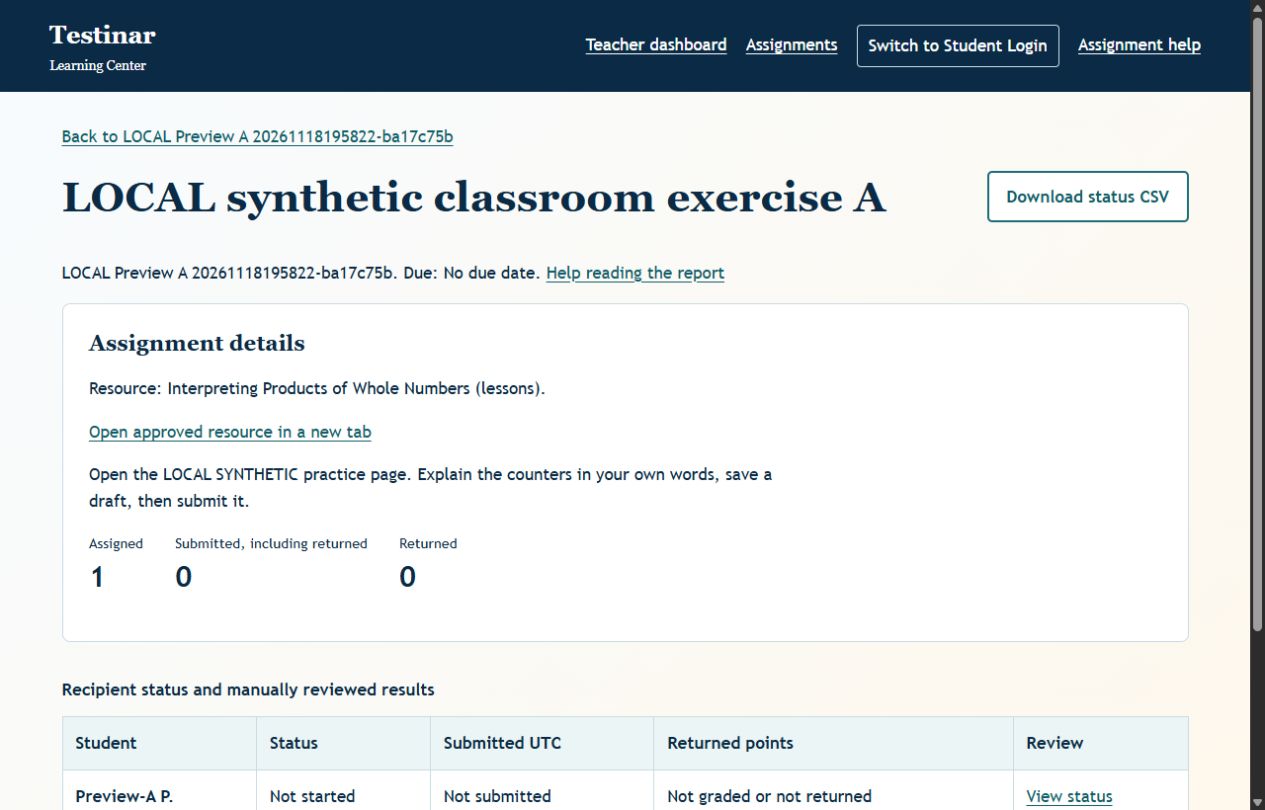
Read the submitted response, save your review privately, and return it when ready.
Writing is reviewed by you, not automatically or by AI. Saving a review keeps feedback and points hidden. Return work releases them to the student. Submitted responses and returned reviews are read-only in this release; there is no reopen or resubmit workflow yet.
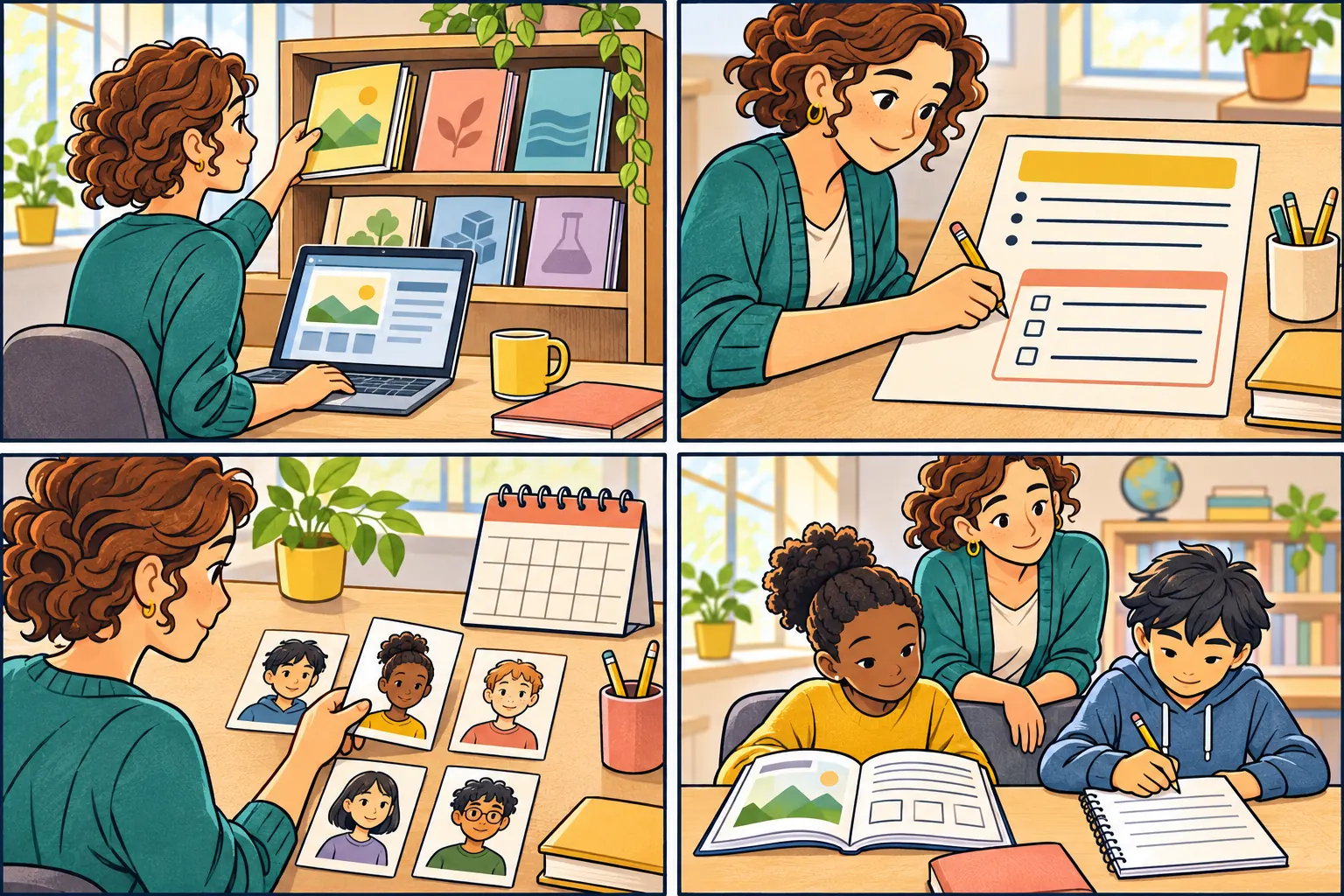
Open a task to see the four illustrated steps. The text explains the real behavior; the drawings do not show actual student records or every screen control.
A class, a task, a feedback loopSee how the classroom pieces connect.Open or close the illustrated steps
Illustrated example, not a screenshot. Read the actual steps alongside it.
Set up your class
Choose the class grade and state. Keep class names neutral and easy to recognize.
Add your students
Add students individually or preview a roster CSV. Give each child only their own login card.
Assign a clear task
Choose an approved resource, add instructions, and select the class, groups, or individual students.
Review and return
Read submitted responses. Save a private review, then explicitly return feedback for the student to see.
These are real example screens using made-up students, not private classroom records. Your class names and assignments will be different. Open an image to inspect it at full size.
Arrange instructional groupsChoose active members privately. Existing assignment recipients remain fixed when a group changes.Review a roster before adding itUploading only validates. Check every row before confirming and saving the one-time login cards.Plan the next practiceUse the month view or phone-friendly agenda. Due dates are reminders, not automatic grade penalties.The teacher's reportSee what was assigned, submitted, and returned. A resource click is not counted as completed work.The student's returned workThe response and feedback stay together. Points appear only when the teacher returns them.
Common questions
Does opening a lesson or public quiz give a classroom score?
No. Public practice is a resource link, not a tracked classroom attempt. The student must return to the assignment to save and submit a written response. The teacher reviews that response manually.
Does the system save every keystroke?
No. Students must select Save draft. A warning helps protect unsaved changes, but it is not a substitute for saving. Teachers should search for a resource before entering assignment details because that search reloads the form.
What if I choose the wrong CSV file?
Uploading shows a preview first. No students are created until the teacher confirms. Check the class, names, duplicates, skipped rows, and errors before confirming. The import history explains when an import can be undone; undo does not delete previous work.
What happens when a group or class roster changes?
The recipients of an existing assignment stay fixed. A later group edit or new enrollment does not silently add or remove recipients. Removing a student's class access prevents that student from opening the old class's work; the history is preserved.
How do due dates and late work behave?
The calendar uses date-only due dates and labels its reference date. A past due date is a planning reminder, not an automatic penalty, timer, or grade. Your teacher decides the classroom policy.
What if a PIN is lost or a session ends?
Ask the teacher for a reset and sign in with the current class code. PIN lists are not recoverable from the roster. Editing access, archiving a class, or changing its code may end existing sessions. Parent mode cannot recover a teacher-issued PIN.
Can a submitted response be changed?
Not in this release. Submitting locks the response. Returned reviews are also read-only. Ask the teacher what to do next; reopening and resubmission require a later revision-history feature.
Is this a full school gradebook or parent messaging system?
Not yet. Classroom assignments, feedback, groups, roster imports, and planning are the current tools. School administration, co-teaching, weighted gradebooks, attachments, guardian invitations, and classroom messaging are separate planned stages. No automatic writing or mastery score is claimed.