





A math test prep calendar gives families a clear plan instead of last-minute cramming. This 8-week Grade 7 math calendar shows what to review each week, how to use practice tests, and how to turn missed questions into steady improvement.
This plan is best for families who want a slower, steadier Grade 7 math review routine before a major classroom test, benchmark, or state assessment. It focuses on proportional relationships, unit rates, percents, rational numbers, expressions, equations, inequalities, scale drawings, circles, geometry, statistics, probability, and multi-step word problems, while keeping home practice calm, organized, and realistic.
Who This Plan Is For
This calendar is for parents, tutors, and teachers who want a simple way to organize Grade 7 math review. It is not designed to make students study for hours. It is designed to help students practice the right skills at the right time.
The plan works best when each session is short enough to stay focused. For many Grade 7 students, 35 to 45 minutes is enough for one home study session. If your child is tired or frustrated, shorten the session and focus on one skill.
Before Week 1
Before the calendar begins, take a baseline practice test or realistic mixed diagnostic set. Do not worry too much about the score. The first checkpoint is mainly for finding patterns.
- Write down which skills were missed most often.
- Separate careless mistakes from true skill gaps.
- Choose two skills that need the most attention.
- Set up a simple error log before the weekly review begins.
The 8-Week Grade 7 Math Test Prep Calendar
Week 1
Baseline, Routines, Ratios, and Proportional Relationships
Goal: Start calmly, find weak spots, and rebuild proportional reasoning from the beginning.
- Take one baseline practice test or realistic mixed diagnostic set.
- Review ratio language, equivalent ratios, tables, graphs, and constants of proportionality.
- Practice writing proportional equations from tables, graphs, and word problems.
- Set up an error log sorted by skill, mistake type, and corrected strategy.
Week 2
Unit Rates, Percents, Discounts, Markups, Tax, and Tips
Goal: Strengthen real-world proportional reasoning and percent fluency.
- Practice unit rates such as cost per item, miles per hour, and pages per minute.
- Review percent as a rate per 100 and connect percents to fractions and decimals.
- Solve discount, markup, tax, tip, commission, and percent-change problems.
- Label original amount, change, and final amount before calculating.
Week 3
Rational Numbers, Integers, Fractions, and Decimals
Goal: Improve accuracy with signs, operations, and number sense.
- Review adding, subtracting, multiplying, and dividing integers.
- Practice operations with fractions, decimals, and mixed rational numbers.
- Use estimation to check whether signs and answer sizes are reasonable.
- Retry missed rational-number questions and explain the sign rule used.
Week 4
Expressions, Equations, Inequalities, and Word Problems
Goal: Connect variables, operations, and real-world situations.
- Review simplifying expressions and using properties of operations.
- Practice solving equations with inverse operations and checking solutions.
- Translate word problems into equations or inequalities before solving.
- Take one short mixed checkpoint and review every missed algebra question.
Week 5
Scale Drawings, Similar Figures, and Geometry Formulas
Goal: Build visual reasoning and careful formula selection.
- Review scale factors, scale drawings, similar figures, and proportional side lengths.
- Practice area, circumference, composite figures, surface area, and volume.
- Write units before and after solving to avoid area, length, and volume mix-ups.
- Create a formula checklist for common Grade 7 geometry problems.
Week 6
Statistics, Probability, Samples, and Data Displays
Goal: Improve interpretation of graphs, samples, outcomes, and data summaries.
- Review random samples, populations, predictions, and informal comparisons.
- Practice mean, median, range, variability, and data displays.
- Review simple probability, compound probability, and outcome counting.
- Read titles, labels, scales, and totals before answering each data question.
Week 7
Mixed Review, Multi-Step Problems, and Timed Sections
Goal: Build recognition, pacing, and stamina with realistic mixed practice.
- Take one timed mixed section with proportional reasoning, algebra, geometry, and data.
- Practice multi-step word problems by underlining the final question first.
- Review the error log and choose the three highest-impact mistake patterns.
- Retry similar questions until the corrected strategy feels automatic.
Week 8
Final Practice Test, Error Log Review, and Test-Day Confidence
Goal: Bring all Grade 7 skills together with calm pacing and confidence.
- Take one full practice test or two realistic timed sections early in the week.
- Review missed questions by skill instead of only checking the answer key.
- Practice a simple pacing routine: solve, skip, return, and check.
- Keep the final day light, organized, and confidence-focused.
Home routine
Daily Practice Routine
A daily routine keeps practice predictable. Use this structure three to five days per week.
Warm Up
Review facts, vocabulary, or one quick skill.
Skill Review
Practice the main topic for the week.
Word Problem
Solve one problem slowly and explain the plan.
Error Log
Correct one missed question from earlier practice.
Confidence Finish
End with one problem your child can solve well.
How to Use Practice Tests During This Plan
Practice tests should be used as checkpoints, not as the whole study plan. A practice test shows what needs attention. The learning happens when students review mistakes and retry similar problems.
- Use the first test as a baseline.
- Use a mid-plan test or timed section to measure progress.
- Use a final test near the end to practice pacing and stamina.
- Review every missed question before moving to another test.
Parent tool
Parent Error Log
An error log turns practice into a plan. Keep it simple enough to use after every quiz or test.
| Missed Skill | Mistake Type | Correct Strategy | Retry Task |
|---|---|---|---|
| Word problems | Solved for the wrong quantity. | Underline the final question before calculating. | Try two similar word problems and explain the plan. |
| Computation | Careless calculation error. | Estimate first, solve, then check reasonableness. | Retry five related calculation problems. |
| Concept | Used the wrong rule or formula. | Review the meaning with a model or example. | Solve one visual problem and one test-style problem. |
Next step
Grade 7 Math Practice Resources by State
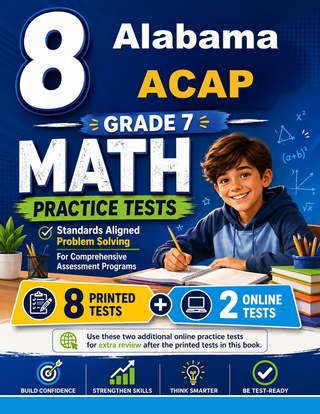
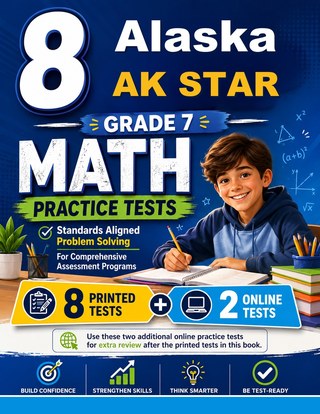
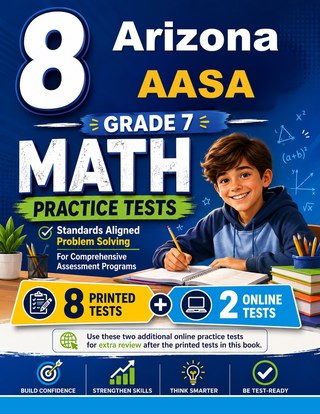
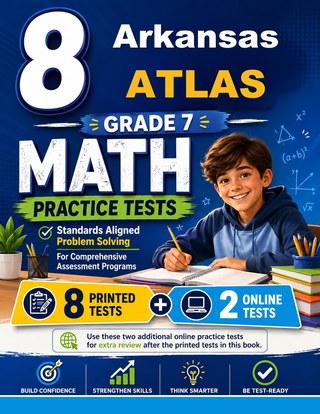
Use state-specific practice tests as checkpoints during the calendar. Start with one baseline test, review mistakes, then use another test to measure improvement.
Summary
A Grade 7 math test prep calendar works best when it balances skill review, practice tests, and mistake correction. Follow the weekly focus, keep sessions short, review missed questions carefully, and use practice tests as checkpoints. This gives students a calmer, stronger path to test readiness.
FAQ
Is a 8-week Grade 7 math test prep calendar enough?
A 8-week plan can be enough when students practice consistently and review missed questions. If your child has major skill gaps, start earlier or use the plan at a slower pace.
How many days per week should my child study Grade 7 math?
Most students do well with four or five short sessions per week. Short, consistent practice is usually better than one long weekend session.
Should we use full practice tests every week?
No. Practice tests should be checkpoints. Students learn more when full tests are followed by targeted review, short skill practice, and retry problems.
How long should each home practice session be?
For Grade 7, 35 to 45 minutes works well for focused review. Include proportional reasoning, rational-number accuracy, one multi-step problem, and one mistake-correction task.
What should parents do after missed questions?
Use an error log. Write the missed skill, the mistake type, the corrected strategy, and one similar problem to retry.
How should we prepare during the final week?
The final week should focus on mixed review, pacing, confidence, and high-impact mistakes. Avoid cramming brand-new skills on the last day.