
CH01-03 lesson

Multistep Word Problems Learning Activity

A focused Grade 4 learning session for Multistep Word Problems using visual models, worked examples, strategy guidance, and a short mastery check.

18
minutes
6
lesson parts
11
practice items
Learning goal

Students will solve multistep whole-number word problems, interpret remainders, and check whether answers are reasonable.

Student goal: I can solve a multistep word problem and check that my answer makes sense.

concept

Learn the Idea

Multistep Word Problems means choosing a model, naming what each number means, and explaining the strategy.

  • Read the question carefully and identify what is being asked.
  • Choose a model, equation, table, or diagram that matches the situation.
  • Solve one step at a time and keep units or labels attached.
  • Use the answer explanation to check that the result makes sense.
visual model

See the Math

Visual Model 1

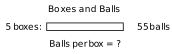
Question: A store arranges \(5\) boxes of balls. If there are \(55\) balls total, how many balls are in each box?
Visual Model 1

  • A. \(9\)
  • B. \(12\)
  • C. \(10\)
  • D. \(11\) balls

Why it works: The diagram shows \(5\) equal boxes holding \(55\) balls in all---"equal groups" is a division signal. Step 1: set up the division: \(55 \div 5\). Step 2: solve: \(55 \div 5 = 11\) balls per box. Quick check: \(5 \times 11 = 55\). \checkmark

Answer: \(11\) balls

worked example

Follow a Worked Example

Example 1

Question: The table shows books in each grade. If they combine all books and divide equally among \(9\) classrooms, how many books does each classroom get?

Example 1

  • A. \(7\)
  • B. \(9\)
  • C. \(8\)
  • D. \(6\)
  1. Read the table for the totals, then combine.
  2. Step 1: \(18 + 24 + 30 = 72\) books in all.
  3. Step 2: share among \(9\) classrooms: \(72 \div 9 = 8\) books each.

Answer: \(8\) books

Example 2

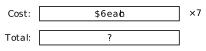
Question: A store buys \(7\) guitars at \($6\) each. How much does the store spend in total?

Example 2

  • A. \($36\)
  • B. \($48\)
  • C. \($42\)
  • D. \($50\)
  1. The tape diagram shows \(7\) guitars at \($6\) each---"each" with a count is a multiplication clue.
  2. Step 1: set up: \(7 \times $6\).
  3. Step 2: solve: \(7 \times 6 = 42\), so the store spends \($42\).
  4. Quick check: \($42 \div 7 = $6\) per guitar. \checkmark

Answer: \($42\)

real world

Connect It to a Real Situation

Problem 1

Question: Ava buys \(3\) boxes of markers. Each box has \(12\) markers. She also buys \(6\) loose markers. How many markers does she have in total?

  • A. \(30\)
  • B. \(36\)
  • C. \(18\)
  • D. \(42\)

Why it works: Two steps! Step 1: find how many markers are in the boxes. \(3\) boxes \(\times 12\) markers = \(36\). Step 2: add the loose markers: \(36 + 6 = 42\) markers in total.

Answer: \(42\) markers

strategy

Avoid Mistakes and Choose a Strategy

  • Rushing before identifying what the numbers represent.
  • Choosing an operation that does not match the situation.
  • Dropping labels, units, or context from the answer.
  • Skipping the estimate or reasonableness check.
  • Underline the question being asked.
  • Use a model before jumping to computation.
  • Write an equation that matches the story or picture.
  • Explain the final answer in a sentence.
summary

Remember the Key Idea

Multistep Word Problems becomes easier when students connect the question to a model, use clear steps, and explain why the answer fits.

GOLDEN RULE

Understand the model before choosing the operation.

Guided to independent practice

Solve before opening the answer

Use scratch paper. The explanation matters more than simply seeing whether the choice is correct.

warmup

2 questions
G4-C01-T03-Q001 About 1 min

A library has \(8\) shelves. Each shelf holds \(45\) books. The librarian removes \(72\) books to repair them. How many books are left on the shelves?

  1. A \(360\)
  2. B \(432\)
  3. C \(217\)
  4. D \(288\)
Check answer and explanation

Answer D: \(288\)

Two steps! Step 1: find the total books on the shelves. \(8\) shelves \(\times 45\) books = \(360\) books. Step 2: take out the books being repaired. \(360 - 72 = 288\) books left on the shelves.

G4-C01-T03-Q002 About 1 min

Ava buys \(3\) boxes of markers. Each box has \(12\) markers. She also buys \(6\) loose markers. How many markers does she have in total?

  1. A \(30\)
  2. B \(36\)
  3. C \(18\)
  4. D \(42\)
Check answer and explanation

Answer D: \(42\)

Two steps! Step 1: find how many markers are in the boxes. \(3\) boxes \(\times 12\) markers = \(36\). Step 2: add the loose markers: \(36 + 6 = 42\) markers in total.

guided

1 question
G4-C01-T03-Q003 About 1 min

Sam has \(24\) stickers. He sorts them into \(4\) equal groups and keeps one group. Then he gets \(8\) more stickers. How many stickers does he have now?

  1. A \(20\)
  2. B \(16\)
  3. C \(12\)
  4. D \(14\)
Check answer and explanation

Answer D: \(14\)

Two steps! Step 1: equal groups means divide. \(24 \div 4 = 6\) stickers in the group Sam keeps. Step 2: add the new stickers: \(6 + 8 = 14\) stickers now.

practice

5 questions
G4-C01-T03-Q004 About 1 min

Ming has \(50\) cookies. She gives away \(14\) cookies. Then she puts the remaining cookies equally into \(4\) bags. How many cookies are in each bag?

  1. A \(12\)
  2. B \(11\)
  3. C \(9\)
  4. D \(8\)
Check answer and explanation

Answer C: \(9\)

Two steps! Step 1: find how many cookies are left after giving some away. \(50 - 14 = 36\) cookies. Step 2: equal bags means divide: \(36 \div 4 = 9\) cookies per bag.

G4-C01-T03-Q005 About 1 min

Diego buys \(5\) packs of pens. Each pack has \(6\) pens. He also has \(4\) old pens. How many pens does he have altogether?

  1. A \(30\)
  2. B \(24\)
  3. C \(34\)
  4. D \(15\)
Check answer and explanation

Answer C: \(34\)

Two steps! Step 1: find how many pens are in the packs. \(5 \times 6 = 30\). Step 2: add the old pens: \(30 + 4 = 34\) pens altogether.

G4-C01-T03-Q006 About 1 min

A store has \(100\) apples. They receive \(35\) more apples. Then they sell \(42\) apples. How many apples are left?

  1. A \(65\)
  2. B \(77\)
  3. C \(135\)
  4. D \(93\)
Check answer and explanation

Answer D: \(93\)

Two steps! Step 1: add the new shipment: \(100 + 35 = 135\) apples. Step 2: take away the ones sold: \(135 - 42 = 93\) apples left.

G4-C01-T03-Q007 About 1 min

Mia has \(7\) cups. Each cup holds \(8\) marbles. She loses \(15\) marbles. How many marbles does she have left?

  1. A \(56\)
  2. B \(49\)
  3. C \(71\)
  4. D \(41\)
Check answer and explanation

Answer D: \(41\)

Two steps! Step 1: find the total marbles. \(7\) cups \(\times 8\) marbles = \(56\). Step 2: take away the lost marbles: \(56 - 15 = 41\) marbles left.

G4-C01-T03-Q008 About 1 min

Noah has \(36\) coins. He sorts them into \(3\) equal groups and keeps one group. Then he spends \(5\) coins. How many coins does Noah have left?

  1. A \(16\)
  2. B \(12\)
  3. C \(7\)
  4. D \(31\)
Check answer and explanation

Answer C: \(7\)

Two steps! Step 1: equal groups means divide: \(36 \div 3 = 12\) coins in the group Noah keeps. Step 2: subtract what he spends: \(12 - 5 = 7\) coins left.

exit

3 questions
G4-C01-T03-Q009 About 1 min

Kai has \(15\) toy cars. His mom gives him \(9\) more. He puts them all into \(4\) equal boxes. How many cars are in each box?

  1. A \(8\)
  2. B \(5\)
  3. C \(9\)
  4. D \(6\)
Check answer and explanation

Answer D: \(6\)

Two steps! Step 1: find Kai's total cars. \(15 + 9 = 24\) cars. Step 2: equal boxes means divide: \(24 \div 4 = 6\) cars in each box.

G4-C01-T03-Q010 About 1 min

A farmer has \(80\) sheep. She sells \(25\) sheep. Then she buys \(30\) new sheep. How many sheep does she have now?

  1. A \(75\)
  2. B \(55\)
  3. C \(105\)
  4. D \(85\) sheep
Check answer and explanation

Answer D: \(85\) sheep

Two steps! Step 1: take away the sheep she sold: \(80 - 25 = 55\). Step 2: add the new sheep: \(55 + 30 = 85\) sheep.

G4-C01-T03-Q011 About 1 min

A school has \(4\) classrooms. Each classroom has \(28\) students. The principal needs to divide all students into groups of \(7\) for a field trip. How many groups will there be?

  1. A \(7\)
  2. B \(32\)
  3. C \(4\)
  4. D \(16\)
Check answer and explanation

Answer D: \(16\)

Two steps! Step 1: find the total students. \(4 \times 28 = 112\) students. Step 2: equal groups of \(7\) means divide: \(112 \div 7 = 16\) groups.

Page UP