CH01-09 lesson

Solving Rate and Ratio Word Problems Learning Activity

A focused Grade 6 learning session for Solving Rate and Ratio Word Problems using visual models, worked examples, strategy guidance, and a short mastery check.

18
minutes
6
lesson parts
11
practice items
Learning goal

Students will build Grade 6 mastery of solving rate and ratio word problems using models, equations, and test-style reasoning.

Student goal: I can solve problems involving solving rate and ratio word problems.

Helpful first: Solving Percent Problems
concept

Learn the Idea

Solving Rate and Ratio Word Problems means choosing a model, naming what each number means, and explaining the strategy.

  • Read the question carefully and identify what is being asked.
  • Choose a model, equation, table, or diagram that matches the situation.
  • Solve one step at a time and keep units or labels attached.
  • Use the answer explanation to check that the result makes sense.
visual model

See the Math

Visual Model 1

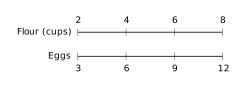
Question: A recipe uses \(2\) cups of flour for every \(3\) eggs. How many cups of flour are needed for \(12\) eggs?

Visual Model 1

  • A. \(4\)
  • B. \(6\)
  • C. \(8\)
  • D. \(10\)

Why it works: The ratio is \(2:3\) (flour to eggs). For \(12\) eggs, multiply both parts by \(4\): \(2 \times 4 = 8\) cups of flour.

Answer: \(8\) cups

worked example

Follow a Worked Example

Example 1

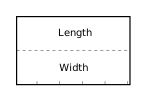
Question: A rectangular garden is divided into a length-to-width ratio of \(5:3\). If the width is \(12\) feet, what is the length?

Example 1

  • A. \(20\) feet
  • B. \(18\) feet
  • C. \(15\) feet
  • D. \(24\) feet
  1. Ratio \(5:3\) with width \(12\) means each part is \(12 \div 3 = 4\) feet.
  2. Length is \(5 \times 4 = 20\) feet.

Answer: \(20\) feet

Example 2

Question: A recipe serves \(2\) people and uses \(\frac{1}{2}\) cup of milk. How much milk is needed to serve \(8\) people?

Example 2

  • A. \(\frac{1}{2}\) cup
  • B. \(1\) cup
  • C. \(2\) cups
  • D. \(4\) cups
  1. Unit rate: \(\frac{1}{2} \div 2 = \frac{1}{4}\) cup per person.
  2. For \(8\) people: \(\frac{1}{4} \times 8 = 2\) cups.

Answer: \(2\) cups

real world

Connect It to a Real Situation

Problem 1

Question: A printer prints \(30\) pages in \(5\) minutes. At this rate, how many pages will it print in \(12\) minutes?

  • A. \(36\)
  • B. \(60\)
  • C. \(90\)
  • D. \(72\)

Why it works: The unit rate is \(30\div5=6\) pages per minute. In \(12\) minutes the printer prints \(6\times12=72\) pages.

Answer: \(72\)

strategy

Avoid Mistakes and Choose a Strategy

  • Rushing before identifying what the numbers represent.
  • Choosing an operation that does not match the situation.
  • Dropping labels, units, or context from the answer.
  • Skipping the estimate or reasonableness check.
  • Underline the question being asked.
  • Use a model before jumping to computation.
  • Write an equation that matches the story or picture.
  • Explain the final answer in a sentence.
summary

Remember the Key Idea

Solving Rate and Ratio Word Problems becomes easier when students connect the question to a model, use clear steps, and explain why the answer fits.

GOLDEN RULE

Understand the model before choosing the operation.

Guided to independent practice

Solve before opening the answer

Use scratch paper. The explanation matters more than simply seeing whether the choice is correct.

warmup

2 questions
G6-C01-T09-Q001 About 1 min

A printer prints \(30\) pages in \(5\) minutes. At this rate, how many pages will it print in \(12\) minutes?

  1. A \(36\)
  2. B \(60\)
  3. C \(90\)
  4. D \(72\)
Check answer and explanation

Answer D: \(72\)

The unit rate is \(30\div5=6\) pages per minute. In \(12\) minutes the printer prints \(6\times12=72\) pages.

G6-C01-T09-Q002 About 1 min

A recipe uses \(2\) cups of flour for every \(3\) eggs. How many cups of flour are needed for \(12\) eggs?

Solving Rate and Ratio Word Problems visual for G6-C01-T09-Q002
  1. A \(4\)
  2. B \(6\)
  3. C \(8\)
  4. D \(10\)
Check answer and explanation

Answer C: \(8\)

The ratio is \(2:3\) (flour to eggs). For \(12\) eggs, multiply both parts by \(4\): \(2 \times 4 = 8\) cups of flour.

guided

1 question
G6-C01-T09-Q003 About 1 min

A sports team won \(15\) games and lost \(5\) games. What is the ratio of wins to total games played?

  1. A \(3:1\)
  2. B \(3:4\)
  3. C \(15:20\)
  4. D \(20:15\)
Check answer and explanation

Answer B: \(3:4\)

Total games: \(15 + 5 = 20\). Ratio of wins to total is \(15:20\), which simplifies to \(3:4\) by dividing both by \(5\).

practice

5 questions
G6-C01-T09-Q004 About 1 min

Store A sells \(8\) oranges for $2. Store B sells \(12\) oranges for $3. Which store offers the better price per orange?

  1. A Store A
  2. B Store B
  3. C Both are the same
  4. D Cannot be determined
Check answer and explanation

Answer C: Both are the same

Store A: \(2 \div 8 = 0.25\) per orange. Store B: \(3 \div 12 = 0.25\) per orange. Same unit rate.

G6-C01-T09-Q005 About 1 min

If \(\frac{4}{6} = \frac{x}{15}\), what is the value of \(x\)?

  1. A \(8\)
  2. B \(18\)
  3. C \(12\)
  4. D \(10\)
Check answer and explanation

Answer D: \(10\)

Cross-multiply: \(4 \times 15 = 6 \times x\), so \(60 = 6x\), thus \(x = 10\).

G6-C01-T09-Q006 About 1 min

A model train is built at a scale of \(1:50\). If the model is \(8\) inches long, how many inches long is the real train?

  1. A \(200\)
  2. B \(300\)
  3. C \(400\)
  4. D \(500\)
Check answer and explanation

Answer C: \(400\)

At a scale of \(1:50\), the real object is \(50\) times larger. \(8 \times 50 = 400\) inches.

G6-C01-T09-Q007 About 1 min

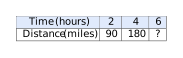
The table below shows a proportional relationship between distance and time. What is the missing value?

Solving Rate and Ratio Word Problems visual for G6-C01-T09-Q007
  1. A \(240\)
  2. B \(260\)
  3. C \(270\)
  4. D \(300\)
Check answer and explanation

Answer C: \(270\)

Rate is \(90 \div 2 = 45\) miles per hour. For \(6\) hours: \(45 \times 6 = 270\) miles.

G6-C01-T09-Q008 About 1 min

Maria buys \(\frac{1}{2}\) kilogram of almonds for $6. What is the unit price per kilogram?

  1. A $3
  2. B $6
  3. C $12
  4. D $18
Check answer and explanation

Answer C: $12

Unit rate: \(6 \div \frac{1}{2} = 6 \times 2 = 12\) dollars per kilogram.

exit

3 questions
G6-C01-T09-Q009 About 1 min

A car travels \(120\) miles in \(2\) hours. At the same rate, how far will it travel in \(5\) hours?

  1. A \(240\) miles
  2. B \(300\) miles
  3. C \(360\) miles
  4. D \(420\) miles
Check answer and explanation

Answer B: \(300\) miles

Step 1: Rate is \(120 \div 2 = 60\) mph. Step 2: Distance in \(5\) hours is \(60 \times 5 = 300\) miles.

G6-C01-T09-Q010 About 1 min

In a classroom, the ratio of boys to girls is \(4:3\). If there are \(8\) boys, how many girls are there?

  1. A \(4\)
  2. B \(6\)
  3. C \(8\)
  4. D \(12\)
Check answer and explanation

Answer B: \(6\)

Ratio \(4:3\) with \(8\) boys means multiply by \(2\): \(4 \times 2 = 8\) boys, \(3 \times 2 = 6\) girls.

G6-C01-T09-Q011 About 1 min

A rectangular garden is divided into a length-to-width ratio of \(5:3\). If the width is \(12\) feet, what is the length?

Solving Rate and Ratio Word Problems visual for G6-C01-T09-Q011
  1. A \(20\) feet
  2. B \(18\) feet
  3. C \(15\) feet
  4. D \(24\) feet
Check answer and explanation

Answer A: \(20\) feet

Ratio \(5:3\) with width \(12\) means each part is \(12 \div 3 = 4\) feet. Length is \(5 \times 4 = 20\) feet.

Page UP