CH02-01 lesson

Rounding Whole Numbers Learning Activity

A focused Grade 3 learning session for Rounding Whole Numbers using visual models, worked examples, strategy guidance, and a short mastery check.

15
minutes
6
lesson parts
11
practice items
Learning goal

Students will use place-value reasoning to round whole numbers to the nearest 10 or 100.

Student goal: I can round a whole number to the nearest 10 or 100.

concept

Learn the Idea

Rounding Whole Numbers means using place value, operations, and equations to reason accurately with numbers.

  • Read the question carefully and identify what is being asked.
  • Choose a model, equation, table, or diagram that matches the situation.
  • Solve one step at a time and keep units or labels attached.
  • Use the answer explanation to check that the result makes sense.
visual model

See the Math

Visual Model 1

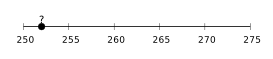
Question: Look at the number line. The number marked \(?\) is closest to which value when rounded to the nearest \(10\)?

Grade 3 Rounding Whole Numbers figure 1

  • A. \(250\)
  • B. \(265\)
  • C. \(260\)
  • D. \(270\)

Why it works: The point is between \(250\) and \(255\), closer to \(250\). A number like \(251\)--\(254\) rounds to \(250\) (ones digit \(<5\)).

Answer: \(250\)

worked example

Follow a Worked Example

Example 1

Question: Fill in the blank: \(156\) rounded to the nearest \(100\) is \_\_\_\_.

NumberRound to 10Round to 100
\(156\)\(160\)?
  • A. \(150\)
  • B. \(160\)
  • C. \(200\)
  • D. \(156\)
  1. The tens digit is \(5\).
  2. Since \(5\geq5\), round up: \(156\) rounds to \(200\).

Answer: \(200\)

Example 2

Question: The number shown is between \(400\) and \(500\). Is it closer to \(400\) or \(500\)?

Grade 3 Rounding Whole Numbers figure 3

  • A. Closer to \(400\)
  • B. Cannot tell
  • C. Exactly in the middle
  • D. Closer to \(500\)
  1. The point is at position \(7\) on the line from \(0\) to \(10\), which is past the midpoint of \(5\).
  2. It represents a number \(450\)--\(499\), closer to \(500\).

Answer: Closer to \(500\)

real world

Connect It to a Real Situation

Problem 1

Question: Two students round differently. Maria says \(127\) rounds to \(130\) (nearest \(10\)). Josh says \(127\) rounds to \(100\) (nearest \(100\)). Are both students correct? Explain.

  • A. Both are wrong; the answer is \(125\)
  • B. Maria is wrong; Josh is right
  • C. Both are correct because they are rounding to different place values
  • D. Josh is wrong; Maria is right

Why it works: For \(127\): to the nearest \(10\), look at the ones digit (\(7\geq5\)), so it rounds to \(130\). To the nearest \(100\), look at the tens digit (\(2<5\)), so it rounds to \(100\). Both answers are correct for their respective place values.

Answer: Both are correct because they are rounding to different place values

strategy

Avoid Mistakes and Choose a Strategy

  • Rushing before identifying what the numbers represent.
  • Choosing an operation that does not match the situation.
  • Dropping labels, units, or context from the answer.
  • Skipping the estimate or reasonableness check.
  • Underline the question being asked.
  • Use a model before jumping to computation.
  • Write an equation that matches the story or picture.
  • Explain the final answer in a sentence.
summary

Remember the Key Idea

Rounding Whole Numbers becomes easier when students connect the question to a model, use clear steps, and explain why the answer fits.

GOLDEN RULE

Understand the model before choosing the operation.

Guided to independent practice

Solve before opening the answer

Use scratch paper. The explanation matters more than simply seeing whether the choice is correct.

warmup

2 questions
G3-C02-T01-Q001 About 1 min

What is \(367\) rounded to the nearest \(100\)?

  1. A \(300\)
  2. B \(370\)
  3. C \(400\)
  4. D \(360\)
Check answer and explanation

Answer C: \(400\)

For \(367\), look at the tens digit (\(6\)). Since \(6\geq5\), round the hundreds digit up: \(367\) rounds to \(400\).

G3-C02-T01-Q002 About 1 min

When you round \(45\) to the nearest \(10\), why does the ones digit matter more than the hundreds digit?

  1. A Because we are rounding to the nearest \(10\), not the nearest \(100\)
  2. B Because the ones digit is always bigger
  3. C Because \(45\) is a large number
  4. D Because \(50\) is better than \(40\)
Check answer and explanation

Answer A: Because we are rounding to the nearest \(10\), not the nearest \(100\)

When rounding to the nearest \(10\), we look at the ones digit to decide if we round up or down. The ones digit is \(5\), so \(45\) rounds to \(50\).

guided

1 question
G3-C02-T01-Q003 About 1 min

For a number like \(\_\_\_\), the rounding rule says "look at the tens digit." What does the rounding rule mean by "look"?

  1. A Stare at the number with your eyes
  2. B Write the tens digit on a separate page
  3. C Remember all the numbers you've rounded before
  4. D Check whether it is \(5\) or greater to decide if we round up
Check answer and explanation

Answer D: Check whether it is \(5\) or greater to decide if we round up

In rounding, "look at the digit" means check its value to apply the rule: if it's \(5\) or more, round up; if less than \(5\), round down.

practice

5 questions
G3-C02-T01-Q004 About 1 min

Two students round differently. Maria says \(127\) rounds to \(130\) (nearest \(10\)). Josh says \(127\) rounds to \(100\) (nearest \(100\)). Are both students correct? Explain.

  1. A Both are wrong; the answer is \(125\)
  2. B Maria is wrong; Josh is right
  3. C Both are correct because they are rounding to different place values

  4. D Josh is wrong; Maria is right
Check answer and explanation

Answer C: Both are correct because they are rounding to different place values

For \(127\): to the nearest \(10\), look at the ones digit (\(7\geq5\)), so it rounds to \(130\). To the nearest \(100\), look at the tens digit (\(2<5\)), so it rounds to \(100\). Both answers are correct for their respective place values.

G3-C02-T01-Q005 About 1 min

Look at the number line. The number marked \(?\) is closest to which value when rounded to the nearest \(10\)?

Rounding Whole Numbers visual for G3-C02-T01-Q005
  1. A \(250\)
  2. B \(265\)
  3. C \(260\)
  4. D \(270\)
Check answer and explanation

Answer A: \(250\)

The point is between \(250\) and \(255\), closer to \(250\). A number like \(251\)--\(254\) rounds to \(250\) (ones digit \(<5\)).

G3-C02-T01-Q006 About 1 min

Round \(589\) to the nearest \(100\).

  1. A \(500\)
  2. B \(580\)
  3. C \(590\)
  4. D \(600\)
Check answer and explanation

Answer D: \(600\)

The tens digit is \(8\). Since \(8\geq5\), round up: \(589\) rounds to \(600\).

G3-C02-T01-Q007 About 1 min

Round \(476\) to the nearest \(100\).

  1. A \(400\)
  2. B \(470\)
  3. C \(475\)
  4. D \(500\)
Check answer and explanation

Answer D: \(500\)

The tens digit is \(7\). Since \(7\geq5\), round up: \(476\) rounds to \(500\).

G3-C02-T01-Q008 About 1 min

Round \(92\) to the nearest \(10\).

  1. A \(80\)
  2. B \(100\)
  3. C \(92\)
  4. D \(90\)
Check answer and explanation

Answer D: \(90\)

The ones digit is \(2\). Since \(2<5\), round down: \(92\) rounds to \(90\).

exit

3 questions
G3-C02-T01-Q009 About 1 min

What is \(145\) rounded to the nearest \(100\)?

  1. A \(100\)
  2. B \(140\)
  3. C \(150\)
  4. D \(200\)
Check answer and explanation

Answer A: \(100\)

The tens digit is \(4\). Since \(4<5\), round down: \(145\) rounds to \(100\).

G3-C02-T01-Q010 About 1 min

Round \(267\) to the nearest \(10\).

  1. A \(260\)
  2. B \(267\)
  3. C \(270\)
  4. D \(300\)
Check answer and explanation

Answer C: \(270\)

The ones digit is \(7\). Since \(7\geq5\), round up: \(267\) rounds to \(270\).

G3-C02-T01-Q011 About 1 min

What is \(804\) rounded to the nearest \(10\)?

  1. A \(800\)
  2. B \(804\)
  3. C \(810\)
  4. D \(900\)
Check answer and explanation

Answer A: \(800\)

The ones digit is \(4\). Since \(4<5\), round down: \(804\) rounds to \(800\).

Page UP