






Complementary angles total 90 degrees, supplementary angles total 180 degrees, and vertical angles are equal. Identify the stated relationship before solving for an unknown angle.
Free practice resources: word-problem PDF; additional practice PDF; PDF set 1; PDF set 2; PDF set 3; existing skill quiz. The original questions below have step-by-step solutions; the downloads are separate resources.
Method and restrictions
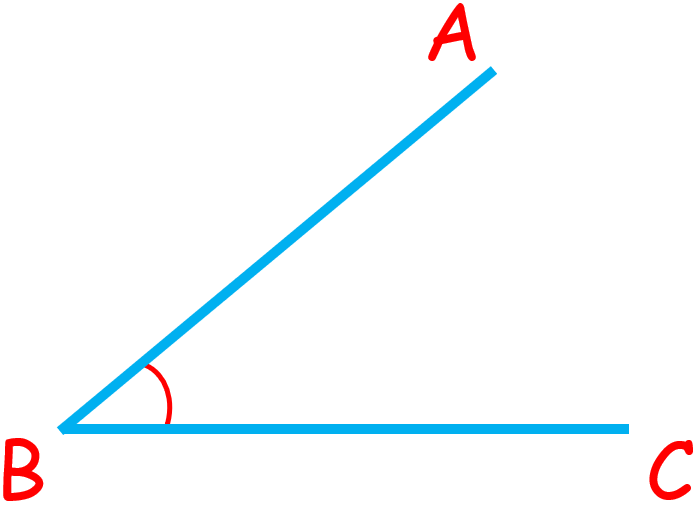
An acute angle is between \(0^\circ\) and \(90^\circ\); a right angle is \(90^\circ\); an obtuse angle is between \(90^\circ\) and \(180^\circ\). A straight angle is \(180^\circ\), and a full turn is \(360^\circ\).
A linear pair is adjacent and forms a straight line. Vertical angles lie opposite each other where two lines intersect. Corresponding and alternate interior angles are equal when a transversal crosses parallel lines; the parallel condition matters.
Worked examples
Example 1
Two angles are complementary. Known angle measure: \(37^\circ\). Find the remaining angle.
- The stated relationship gives a total of \(90^\circ\).
- Add known measures: \(37=37\). Subtract from the total: \(90-37=53\).
- The remaining angle is \(53^\circ\); all measures add to \(90^\circ\).
Example 2
Vertical angles measure \((3x+8)^\circ\) and \(62^\circ\). Find x.
- Vertical angles are equal: \(3x+8=62\).
- Subtract 8: \(3x=54\). Divide by 3: \(x=18\).
- Check: \(3(18)+8=62\); both angles are \(62^\circ\).
Try these first
- Two adjacent angles form a linear pair. Known angle measure: \(112^\circ\). Find the remaining angle.
- Two angles are complementary. Known angle measure: \(24^\circ\). Find the remaining angle.
- Four angles meet around one point. Known angle measures: \(70^\circ\), \(115^\circ\), \(85^\circ\). Find the remaining angle.
Show step-by-step solutions
Practice 1
- The stated relationship gives a total of \(180^\circ\).
- Add known measures: \(112=112\). Subtract from the total: \(180-112=68\).
- The remaining angle is \(68^\circ\); all measures add to \(180^\circ\).
Practice 2
- The stated relationship gives a total of \(90^\circ\).
- Add known measures: \(24=24\). Subtract from the total: \(90-24=66\).
- The remaining angle is \(66^\circ\); all measures add to \(90^\circ\).
Practice 3
- The stated relationship gives a total of \(360^\circ\).
- Add known measures: \(70+115+85=270\). Subtract from the total: \(360-270=90\).
- The remaining angle is \(90^\circ\); all measures add to \(360^\circ\).
Common mistakes
- Adjacent angles are not necessarily equal or supplementary.
- Do not assume that lines are parallel or that a sketch is to scale.
Related skills
Triangle angles; Polygon measurements.
More from the original topic collection: Free printable Worksheets; How to Find the Area of Squares, Rectangles, and Parallelograms; What is The Pythagorean Theorem; How to Calculate the Area of Trapezoids; How to Find the Area and Circumference of Circles.

