




Parents often ask the same question before a state math test: how many practice tests are enough? The honest answer is that your child does not need an endless pile of tests. Your child needs the right number of practice tests, used in the right way.
This guide explains how many New York NYSTP math practice tests a student may need, how to tell whether your child is ready, and how to use each practice test as a learning checkpoint instead of just another score.
The Best Number Depends on Readiness
The purpose of a practice test is not just to say, "My child got this score." A good practice test should reveal what your child understands, what your child almost understands, and what still needs direct review. That is why one practice test is usually not enough for serious preparation.
Think of practice tests as checkpoints. The first test shows the starting point. The next one shows whether review is working. The final one helps your child practice pacing, stamina, and confidence before the real assessment.
For New York NYSTP math preparation, a child who misses only a few questions may need fewer full-length tests. A child who misses questions across several skill areas should take more tests, but only after reviewing the missed skills between tests.
Parent Readiness Scorecard
Use this simple checklist after your child takes a practice test. If most answers are "yes," your child may not need many more tests. If several answers are "not yet," your child probably needs more review before another full-length test.
- Accuracy: Can your child solve grade-level problems without frequent careless errors?
- Word problems: Can your child identify what the question is asking before calculating?
- Stamina: Can your child stay focused through a longer mixed-review set?
- Mistake correction: Can your child explain why an answer was wrong and fix it?
- Confidence: Does your child stay calm when a problem looks unfamiliar?
A Smart Practice-Test Schedule
The best plan is not to take five tests in five days. Students learn more when practice tests are spread out with review time in between.
Step 1
Take one baseline test to find strengths and weak spots.
Step 2
Review missed skills with short lessons and targeted practice.
Step 3
Take a second test to see whether the weak spots improved.
Step 4
Use final timed tests for pacing, confidence, and mixed review.
This approach helps children see progress. It also prevents the common problem of taking many practice tests but repeating the same mistakes every time.
Do More Practice Tests Help?
More practice tests help only when the student reviews mistakes. If a child takes a test, sees the score, and immediately moves to the next test, the score may not improve much. The real learning happens between tests.
A strong routine is simple: take the test, mark missed questions, group mistakes by skill, review those skills, and retry similar problems. Then take another practice test to check progress. This turns practice tests into a preparation system.
How to Use Practice Tests Without Burning Out
Practice should build confidence, not dread. If your child is tired, frustrated, or rushing, shorter practice sessions may work better than another full test.
- Break long tests into sections when the goal is learning.
- Use timed practice only after the skill review is underway.
- Keep an error log with the missed skill and corrected work.
- Celebrate improved accuracy, not just higher scores.
- Use full-length tests near the end to build pacing and stamina.
New York Grade 3 Practice Tests
Try a realistic timed checkpoint
Use this quiz as a baseline checkpoint, then review mistakes before the next full-length practice test.
New York Grade 4 Practice Tests
Try a realistic timed checkpoint
Use this quiz as a baseline checkpoint, then review mistakes before the next full-length practice test.
New York Grade 5 Practice Tests
Try a realistic timed checkpoint
Use this quiz as a baseline checkpoint, then review mistakes before the next full-length practice test.
New York Grade 6 Practice Tests
Try a realistic timed checkpoint
Use this quiz as a baseline checkpoint, then review mistakes before the next full-length practice test.
New York Grade 7 Practice Tests
Try a realistic timed checkpoint
Use this quiz as a baseline checkpoint, then review mistakes before the next full-length practice test.
New York Grade 8 Practice Tests
Try a realistic timed checkpoint
Use this quiz as a baseline checkpoint, then review mistakes before the next full-length practice test.
Recommended resources
Practice Test Resources for New York Families
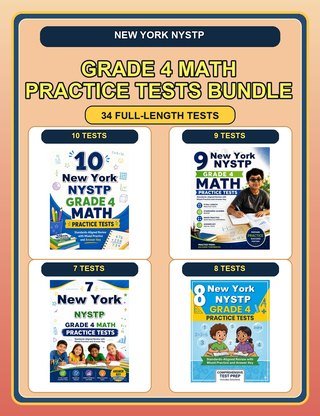
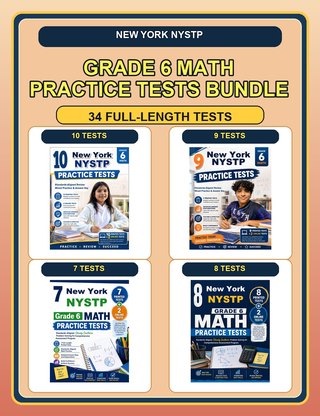
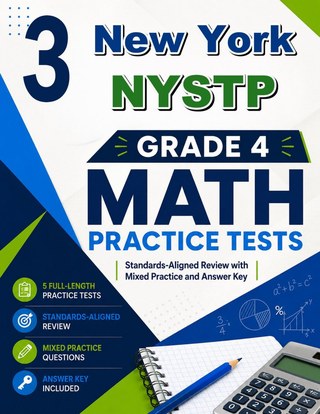
Use short skill practice during the week and full-length practice tests as checkpoints. If your child needs steady review, a 10-test book or bundle makes it easier to practice without constantly searching for new materials.
Grade 3 math practice
Grade 4 math practice
Grade 5 math practice
Grade 6 math practice
Grade 7 math practice
Summary
Your child does not need a random number of practice tests. Your child needs a clear plan. Use 2 to 3 tests for confident students, 4 to 6 tests for students with skill gaps, and 7 to 10 or more tests for long-term weekly practice. Most importantly, review every missed question before moving to the next test.
FAQ
How many practice tests should my child take before New York NYSTP?
Most students need more than one practice test. A confident student may need 2 to 3 tests, a student with skill gaps may need 4 to 6 tests, and a student who needs long-term review may benefit from 7 to 10 or more tests spread across several weeks.
Is one practice test enough?
Usually no. One test can show what your child knows, but it does not give enough time to fix mistakes, rebuild weak skills, and check whether the new learning sticks.
Can too many practice tests hurt?
Yes, if students only take test after test without reviewing mistakes. Practice tests work best when each test is followed by error analysis, targeted lessons, and a short retry set.
Should my child take timed practice tests?
Timed practice is helpful after the student understands the skills. Start untimed for learning, then add timing later to build pacing, stamina, and test-day confidence.
What should we do after a missed question?
Write down the skill, explain the mistake, solve the problem correctly, and then practice two or three similar questions. This simple error log turns mistakes into a study plan.
Should we use full-length tests or short quizzes?
Use both. Short quizzes are best for daily skill practice, while full-length practice tests are best for measuring readiness, pacing, stamina, and mixed-review performance.